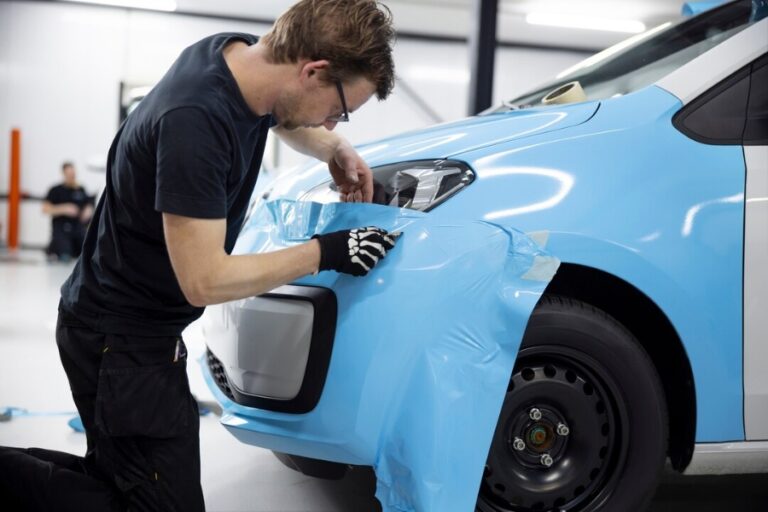
Here it is: a full wrap on a standard car runs $1,500–$3,500, pickup trucks and cargo vans fall in the $3,000–$5,500 range, and box trucks climb to $5,000–$8,000. Those figures cover design, cast-vinyl material, and professional installation at a Florida shop. What makes the Sunshine State different from national averages? UV intensity, salt-air exposure, and heat accelerate wear — so material choice matters more here than almost anywhere else in the country. This guide breaks down every cost variable, compares wrap options side by side, and shows you why fleet wraps routinely deliver the lowest cost-per-impression of any local advertising medium.
| KEY TAKEAWAYS
• Car wraps in Florida average $1,500–$3,500 for a full wrap in 2026 • Trucks and vans range $3,000–$5,500; box trucks run $5,000–$8,000 • Cast Car wraps (3M, Avery) lasts 5–7 years; calendered film lasts 2–3 years • Florida’s UV index and humidity can cut wrap life by 20–30% if garage storage is unavailable • Vehicle wraps deliver as low as $0.04 per impression — far cheaper than billboards or radio • Fleet discounts of 10–20% kick in at 3+ vehicles |
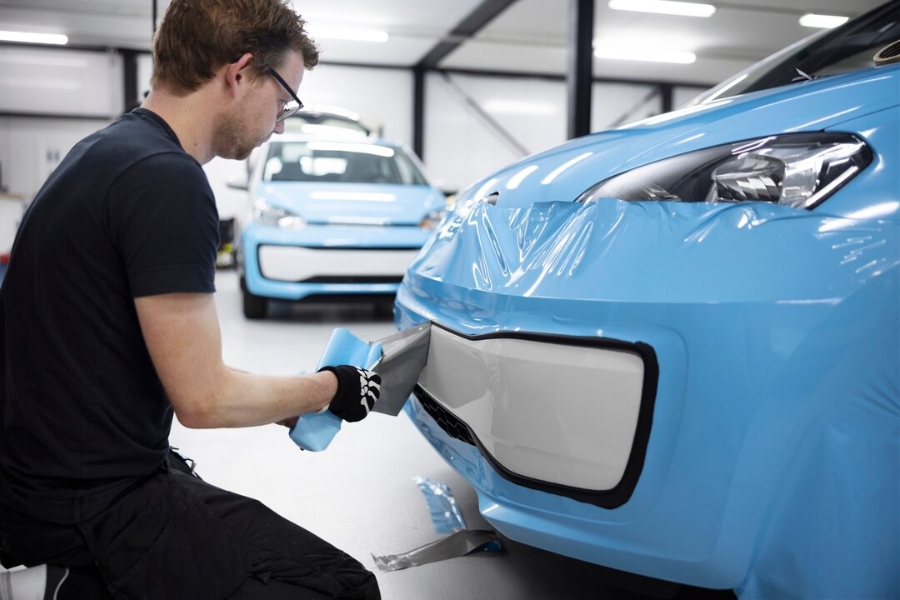
Vehicle Wrap Pricing at a Glance
The table below reflects 2026 Florida market rates, inclusive of premium cast vinyl, design work, and installation. Prices vary based on vehicle complexity, surface condition, and finish type (matte, gloss, satin, or specialty chrome).
| Vehicle Type | Full Wrap | Partial Wrap | Spot / Decals |
| Compact Car (Honda Civic, Toyota Corolla) | $1,500 – $2,200 | $800 – $1,400 | $300 – $600 |
| Mid-Size Sedan / Coupe | $2,000 – $2,800 | $1,000 – $1,600 | $350 – $700 |
| Full-Size SUV / Pickup Truck | $3,000 – $4,500 | $1,500 – $2,500 | $500 – $1,000 |
| Cargo Van / Transit Van | $3,500 – $5,500 | $1,800 – $3,000 | $600 – $1,200 |
| Box Truck (16–26 ft) | $5,000 – $8,000 | $2,500 – $4,500 | $800 – $1,500 |
| Semi Trailer (53 ft) | $8,000 – $15,000+ | $4,000 – $7,000 | $1,200 – $2,500 |
Note: Complex vehicles with deep curves, door handles, mirrors, and bumpers take longer to install and cost proportionally more. A truck with heavy body sculpting can sit at the upper end of its range.
What’s Included in Wrap Pricing
A professional vehicle wrap quote should cover four line items. If a vendor is suspiciously cheap, check which of these they’re skipping.
- Graphic Design — Custom layout sized to your exact vehicle template. Most shops charge $150–$400 for a one-off design; fleet clients often receive templates for free. Bring an AI or high-res logo to keep revision rounds short.
- Vinyl Material — Expect 3M, Avery Dennison, or Oracal cast film on quality jobs. The material alone represents 30–45% of your total cost. Ask your installer which brand and series they use before accepting any quote.
- Printing & Lamination — Digital printing for custom graphics; UV-protective laminate adds lifespan. Laminate adds $1–$3 per sq ft but is non-negotiable in Florida’s climate.
- Surface Prep & Installation — The vehicle must be washed, clay-barred, and any minor paint imperfections addressed before application. Skilled installation typically takes 1–3 days depending on vehicle size. Labor is 30–40% of your total invoice on most jobs.
Optional add-ons: Paint protection film (PPF) under high-impact areas (+$200–$600), ceramic coating over the wrap (+$300–$800), and rush-turnaround fees (+15–25% on most shops).
Full Wrap vs Partial Wrap vs Spot Graphics
Not every business needs a bumper-to-bumper transformation. Here’s how the three tiers compare:
| Feature | Full Wrap | Partial Wrap | Spot Graphics |
| Coverage | 100% of painted surface | 25–75% (panels, sides) | Logos, door numbers, URLs |
| Cost Range | $1,500 – $8,000+ | $800 – $3,000 | $300 – $1,500 |
| Brand Impact | Maximum — total transformation | High on key panels | Moderate — best for already-branded vehicles |
| Install Time | 1–3 days | 4–8 hours | 1–4 hours |
| Best For | New branding, fleet uniformity | Budget-conscious businesses | Adding contact info to existing livery |
| Resale Impact | Protects paint underneath | Partial protection | Minimal protection |
Our recommendation: If you’re launching a new brand or building a fleet, invest in a full wrap. The per-impression value over five-plus years makes the upfront cost trivial. Partial wraps are a legitimate middle ground for owner-operators testing a market. Spot graphics are best for supplementing an existing brand identity you’re happy with.
Material Options & Cost Differences
Vinyl is not vinyl. The film that gets installed on your vehicle determines cost, appearance, and how many years of Florida sun it can handle.
| Material | Cost / Sq Ft | Lifespan (FL) | Conformability | Best Use Case |
| 3M IJ180Cv3 Cast | $12 – $18/sq ft installed | 5–7 years (FL) | Excellent | Premium fleet & full wraps |
| Avery Dennison MPI 1105 | $11 – $16/sq ft installed | 5–7 years (FL) | Excellent | High-detail graphics, curves |
| Oracal 970RA Cast | $10 – $15/sq ft installed | 5–6 years (FL) | Very Good | Color-change wraps |
| Calendered Vinyl (generic) | $6 – $10/sq ft installed | 2–3 years (FL) | Fair | Flat surfaces, short campaigns |
| Chrome / Specialty Films | $18 – $30/sq ft installed | 3–5 years | Varies | Show vehicles, accent panels |
The takeaway: for any vehicle expected to spend years outdoors in Central or South Florida, cast vinyl (3M or Avery) is the minimum you should accept. Calendered film is a false economy for commercial vehicles — it can look tired within 18 months under daily UV exposure.
Cast vs. Calendered — a quick primer: Cast vinyl is manufactured by pouring liquid PVC onto a casting sheet and curing it, which produces a thin, stable, conformable film. Calendered vinyl is rolled through heated drums, leaving internal stress that causes shrinkage over time — especially problematic on curved surfaces. For Florida commercial wraps, cast is the professional standard.
Fleet Wrap Pricing & Volume Discounts
Operating multiple vehicles is where wrap ROI truly multiplies. Most Florida wrap shops offer volume pricing once you clear three or more units, and purpose-built fleet programs can deliver savings of 15–25% versus single-vehicle rates.
Typical Fleet Pricing Structure
- 3–5 vehicles: 10–15% discount off per-unit rate
- 6–10 vehicles: 15–20% discount
- 11+ vehicles: negotiated fleet contract, often including annual refresh pricing
- Consistent template design: eliminates per-vehicle design fees after the first unit
Fleet pricing example: A plumbing company running 8 Transit vans might pay $4,200/unit at standard rates. With a fleet program, that drops to $3,400–$3,600 per van — saving $5,000–$6,400 on the batch while achieving uniform branding across every truck on the road.
Fleet wraps also allow consistent brand standards: every technician’s vehicle looks identical, which reinforces professionalism and drives recall in the neighborhoods your crews service repeatedly.
Florida Heat & Humidity — How They Affect Wrap Cost & Lifespan
Florida is the most demanding wrap environment in the continental United States. Before you approve a quote, understand what you’re up against:
The Four Environmental Factors
- UV Index: Florida consistently ranks among the top three states for UV exposure year-round. UV radiation is the primary cause of vinyl fading, discoloration, and adhesive breakdown.
- Heat: Asphalt temperatures in South Florida regularly exceed 130°F in summer. Sustained heat accelerates adhesive migration, especially on dark-colored vehicles.
- Humidity & Salt Air: Coastal environments introduce salt particles that work under wrap edges, causing premature lifting around door seams, mirrors, and bumpers.
- Rain Cycling: Frequent rain-sun-rain cycles cause expansion and contraction of both the vinyl and the vehicle’s metal panels, stressing seam areas over time.
What This Means for Your Budget
Budget for premium materials upfront, or budget for early replacement. A $500 savings on calendered vinyl today often translates to a $2,000 rewrap cost two years ahead of schedule. In Florida, the “premium tax” for cast vinyl is the smart financial choice.
Pro tip: If your vehicles park outside overnight in Tampa, Orlando, Miami, or Jacksonville, discuss UV-protective overlaminates with your installer. A quality laminate adds $1–$3/sq ft but can extend wrap life by 12–18 months in full-sun environments.
ROI: Cost-Per-Impression vs Other Advertising
The American Trucking Association estimates a single vehicle wrap generates 30,000–70,000 visual impressions per day. In high-traffic Florida markets like Miami, Orlando, and Tampa, that number sits at the upper end. Here’s how the economics compare:
| Channel | Typical Cost | Impressions | Cost Per Impression | Duration |
| Vehicle Wrap (full) | $2,500 one-time | 70,000 / day | $0.04 per 1,000 impressions | 5–7 years |
| Billboard (Florida avg) | $1,200 – $3,000/month | 20,000 – 50,000 / day | $0.50 – $2.00 per 1,000 | Monthly |
| Radio Spot (30-sec) | $500 – $2,000/week | Varies widely | $1.00 – $5.00 per 1,000 | Weekly |
| Facebook/Instagram Ad | $500 – $2,000/month | Varies by budget | $3.00 – $10.00 per 1,000 | Monthly |
| Print Newspaper | $500 – $2,500/insertion | Print circulation only | $5.00 – $15.00 per 1,000 | Single run |
A $2,500 full wrap on a cargo van driven 200 days per year in a mid-size Florida market generates roughly 14,000,000+ impressions over 5 years — at a cost of less than $0.04 per 1,000 impressions. No other local advertising medium comes close to that efficiency for small and mid-size businesses.
Additional ROI factors: wraps protect the underlying paint (preserving resale value), they’re reversible (unlike paint), and a wrapped vehicle serves as 24/7 advertising even when parked — including in your own driveway or service lot.
How Long Wraps Last in Florida
Manufacturer ratings are established in controlled conditions. Florida’s real-world conditions typically reduce those ratings by 15–30% for outdoor-parked vehicles. Here’s a realistic lifespan breakdown:
| Vinyl Type | Rated Lifespan | FL Outdoor Exposure | Maint. Level | Primary Failure Mode |
| Premium Cast (3M, Avery) | 5–7 years | 3–5 years (no garage) | Low | Fade, edge lifting in high-UV zones |
| Standard Cast (Oracal 970) | 4–6 years | 3–4 years (no garage) | Low-Med | Slightly faster color shift |
| Calendered Film | 3–5 years | 2–3 years (no garage) | Medium | Shrinkage, cracking sooner |
| Chrome / Metallics | 3–4 years | 2–3 years | Medium-High | Delamination in high humidity |
Vehicles garaged overnight and hand-washed (rather than automated washes with brushes) consistently outlast outdoor-parked counterparts by 1–2 years, regardless of vinyl grade.
Maintenance Tips to Maximize Florida Wrap Life
- Wash with pH-neutral soap and a soft cloth — no automated brush washes
- Apply a wrap-safe sealant every 6 months in high-UV areas
- Park in shade or a covered structure when possible
- Address lifting edges immediately — Florida humidity will work underneath fast
- Avoid pressure washing seams and edges directly
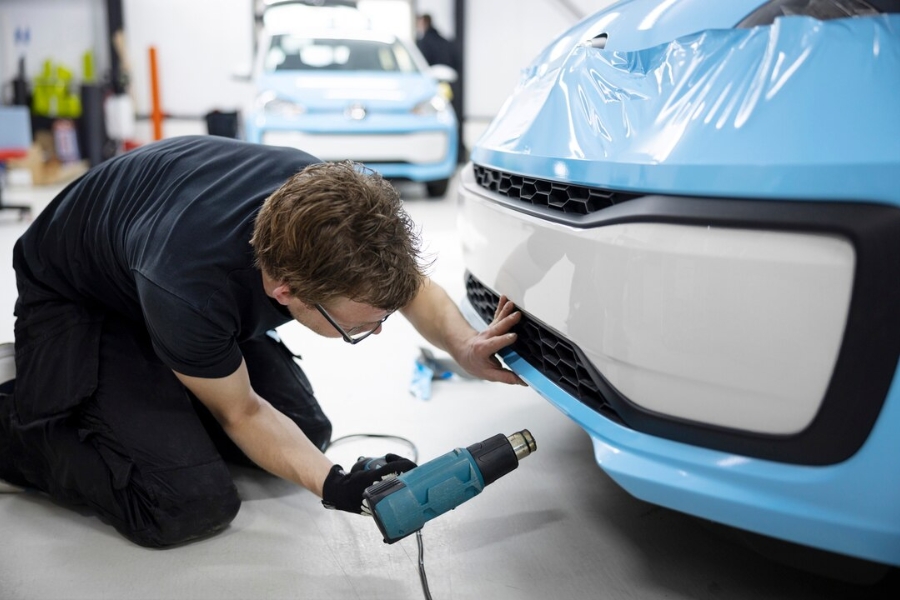
Removing or Replacing a Wrap
Wraps are meant to come off cleanly when removed by a professional — but age, sun damage, and poor-quality adhesive can complicate the process. Budget for removal as part of your total wrap lifecycle cost.
| Vehicle | Removal Only | Remove + Rewrap | Notes |
| Economy Car | $300 – $500 | $500 – $900 | Partial credit if original paint intact |
| Full-Size Truck / SUV | $500 – $800 | $800 – $1,500 | Paint correction may add $200–$400 |
| Cargo / Transit Van | $600 – $1,000 | $1,000 – $1,800 | Adhesive residue common on older wraps |
| Box Truck | $900 – $1,500 | $1,500 – $2,800 | Panel-by-panel billing typical |
Wraps removed within their rated lifespan by a trained technician typically leave paint in excellent condition. Wraps left past their useful life — or applied over paint with existing damage — risk adhesive transfer, paint lifting, and the need for professional paint correction before a new wrap can be applied.
Tax note: For Florida businesses, vehicle wraps may qualify as a deductible advertising expense under IRS Section 162. Consult your accountant — the wrap that protects your brand may also protect your tax bill.
Frequently Asked Questions
Q: How much does a car wrap cost in Florida?
A full wrap on a standard car (Honda Civic, Toyota Camry, or similar) runs $1,500–$3,500 in Florida in 2026. Compact vehicles sit at the lower end; larger sedans and coupes with complex body lines approach the upper range. Partial wraps start around $800 for key panels.
Q: Is a vehicle wrap worth it for a small business?
For most Florida small businesses, yes — emphatically. A $2,500 wrap on a service van driven daily in Orlando or Tampa generates an estimated 14 million impressions over five years, at a cost-per-thousand far below any other local advertising channel. If your vehicles are already on the road, leaving them unbranded is a missed opportunity.
Q: How long does a vehicle wrap last in Florida?
Premium cast vinyl (3M, Avery) lasts 5–7 years in ideal conditions — realistically 4–5 years for Florida vehicles parked outdoors. Calendered vinyl rates at 2–3 years under Florida conditions. Garage storage and regular maintenance can add 12–18 months to either estimate.
Q: Does vehicle wrap damage paint?
When professionally installed on paint in good condition and removed within the rated lifespan, vehicle wraps actually protect the underlying paint from UV and minor abrasion. Wraps left past their lifespan, or applied over compromised paint, can cause adhesive transfer. Always have your paint professionally assessed before wrapping if you’re concerned.
Q: Can I wrap a leased vehicle?
Yes. This is one of the most popular reasons businesses wrap vehicles — the wrap is fully reversible. Remove the wrap at lease end, and the original paint is typically in better condition than if it had been exposed. Just use a professional for removal, not a DIY approach.
Q: How do I choose between a full wrap and a partial wrap?
Ask yourself: do I want to transform the vehicle’s appearance entirely, or do I simply want brand messaging visible on the road? If you’re building a brand from scratch or outfitting a fleet for uniform identity, full wrap. If you have an existing vehicle color you like and just need logos and contact info prominent, partial or spot graphics deliver strong ROI at lower cost.
Q: What’s the difference between 3M and Avery wrap vinyl?
Both are premium cast vinyl manufacturers trusted by professional installers worldwide. 3M’s IJ series (particularly 180Cv3) is known for excellent conformability and a wide color range. Avery Dennison’s MPI 1105 is favored for highly detailed digital prints and complex curves. In Florida’s climate, both perform comparably — your installer’s application skill matters as much as brand preference.
Q: How much does fleet wrap pricing differ from single-vehicle rates?
Fleet discounts typically begin at 3–5 vehicles and range from 10–25% off the per-unit rate. Beyond savings, fleet programs often include template-based design (no per-vehicle design fee after the first unit) and priority scheduling. If you have 3+ vehicles to wrap, ask specifically for fleet program pricing — it’s usually not automatically applied.
| Ready to Wrap Your Florida Fleet?
Signs & LEDs designs, prints, and installs professional vehicle wraps across Florida — from single cars to full fleets. Get a free quote and see your vehicle transformed. Visit signsandleds.com or call us to schedule your free vehicle wrap consultation. |