In today’s competitive business environment, visibility matters more than ever. Whether you’re trying to attract customers driving by your storefront, communicate promotions instantly, or modernize your brand image, signage continues to play a major role in how people discover and interact with businesses.
One of the most effective modern signage solutions available today is the Electronic Message Center (EMC) sign.
An electronic message center allows businesses to display dynamic messages, promotions, graphics, and announcements without replacing physical sign panels or printed materials. Instead of manually changing letters or reprinting graphics, businesses can update content digitally within seconds.
From gas stations and restaurants to schools, churches, shopping centers, and retail locations across Florida, EMC signs are becoming the preferred way to communicate with customers.
This guide explains exactly what EMC signs are, how they work, the different types available, their benefits, legal considerations in Florida, and how to determine whether an EMC sign is the right investment for your business.
What Is an Electronic Message Center (EMC)?
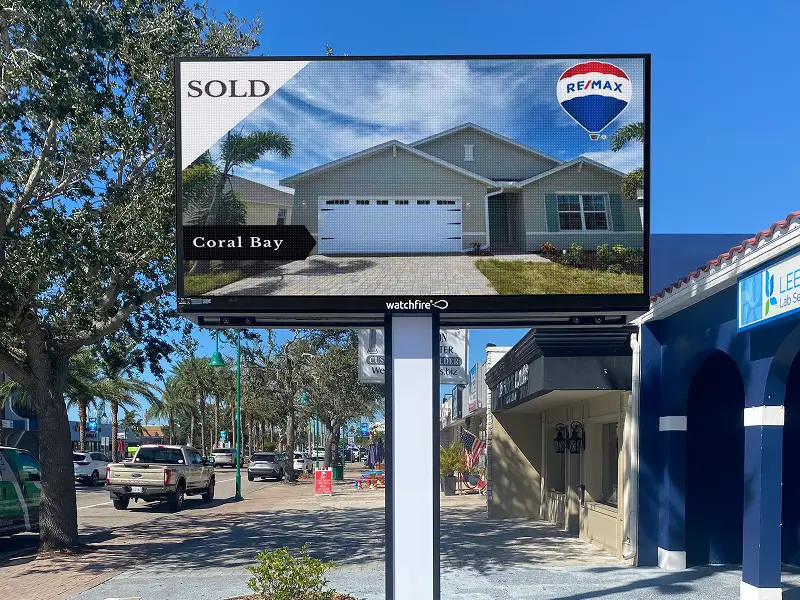
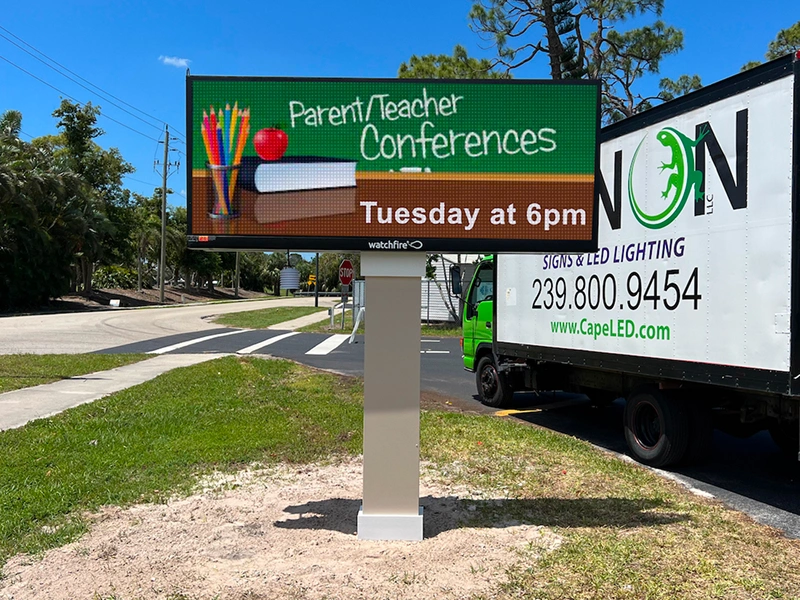
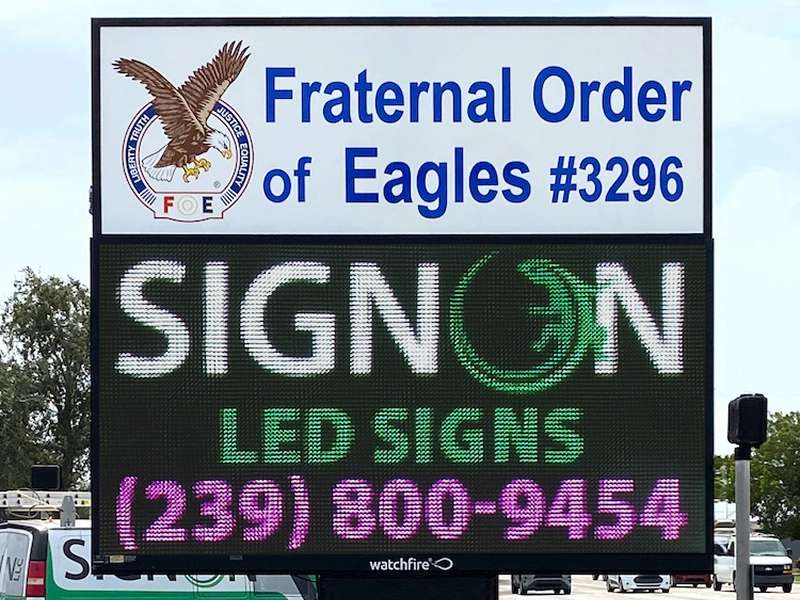
An Electronic Message Center (EMC) is a programmable LED sign designed to display changing text, images, graphics, animations, and in some cases video content.
Unlike traditional signage that requires manual updates, EMC signs allow businesses to control messaging remotely using software connected through WiFi, cellular networks, or wired internet.
These signs are commonly referred to by several names:
- Electronic Message Center (EMC)
- LED Message Board
- Programmable LED Sign
- Digital Reader Board
- Digital Display Sign
- Changeable Message Sign
Regardless of the name, they all share the same purpose: delivering flexible messaging without replacing physical sign faces.
If you’ve ever seen:
- A gas station updating fuel prices
- A restaurant promoting today’s lunch special
- A church rotating weekly announcements
- A school displaying event reminders
you’ve already seen an EMC sign in action.
Why Businesses Are Moving Away from Static Signs
Traditional signs still have value for branding and permanent identification, but they come with limitations.
Static signs require:
- Printing new graphics
- Manual letter replacement
- Physical installation updates
- Longer turnaround times
EMC signs remove those limitations entirely.
Instead of ordering a new sign every time you launch a promotion, you simply update the content digitally.
For businesses running seasonal campaigns, daily specials, or changing schedules, that flexibility becomes a major advantage.
How Does an Electronic Message Center Work?
EMC signs are built using modular LED technology housed inside weather-resistant cabinets designed for outdoor conditions.
Each display contains thousands of LED lights arranged into pixels.
When illuminated together, those pixels create:
- Letters
- Numbers
- Logos
- Images
- Animated graphics
- Video content
The sign receives instructions through software that controls what appears and when.
Core Components of an EMC Sign
LED Modules
Small panels that generate the visual display.
Control System
The onboard computer that processes content.
Communication Hardware
Allows updates through:
- WiFi
- Cellular connection
- Ethernet
- Cloud software
Power Supply
Provides stable electrical operation for continuous performance.
Understanding Pixel Pitch and Resolution
One of the most important specifications when choosing an EMC sign is pixel pitch.
Pixel pitch measures the distance between LED clusters.
Smaller Pixel Pitch (6–10mm)
Benefits:
- Sharper image quality
- Better graphics
- Improved close-up viewing
- Supports detailed visuals
Best for:
- Restaurants
- Retail stores
- Shopping centers
Larger Pixel Pitch (16–25mm)
Benefits:
- Lower cost
- Greater viewing distance
- Excellent readability for text
Best for:
- Monument signs
- Roadside advertising
- Highway visibility
The closer viewers stand to the sign, the tighter your pixel pitch should be.
Types of EMC Signs
Not all electronic message centers perform the same way.
Choosing the right display depends on your goals and budget.
1. Full-Color EMC Signs
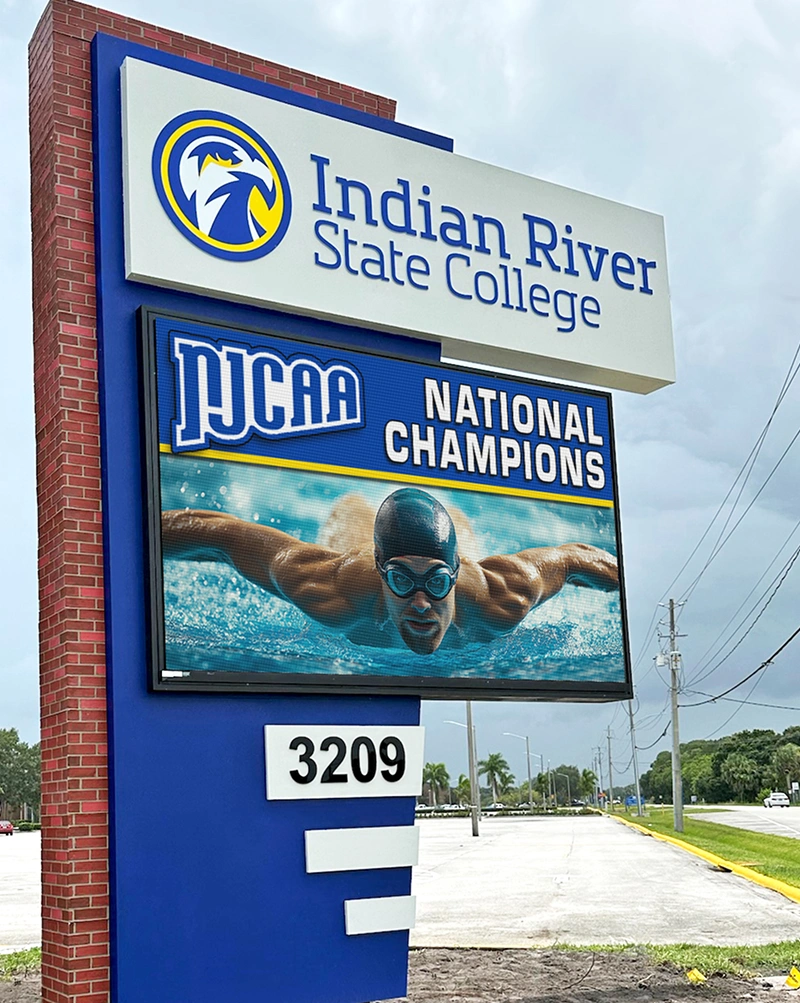
These use RGB (Red, Green, Blue) LED technology to create millions of color combinations.
Features:
- Full-color graphics
- Logos
- Photos
- Video playback
- Animation support
Best for:
- Restaurants
- Retail centers
- Auto dealerships
- Entertainment venues
2. Monochrome EMC Signs
Monochrome displays use a single LED color.
Common options include:
- Red
- Amber
- White
Features:
- Lower cost
- Easy readability
- Reliable message visibility
Best for:
- Churches
- Schools
- Office parks
3. Tri-Color EMC Signs
These displays offer multiple preset color choices.
Benefits:
- More visual flexibility
- Lower investment than RGB
Best for:
- Businesses wanting more impact without full-color pricing

Top Benefits of EMC Signs for Florida Businesses
Florida businesses face unique challenges:
- Intense sunlight
- Seasonal tourism
- High competition
- Frequent weather changes
EMC signs solve many of these challenges.
Instant Message Updates
Change promotions in seconds.
Examples:
- Lunch specials
- Holiday hours
- Emergency announcements
- Flash sales
No printing required.
Lower Advertising Costs
Traditional advertising often requires recurring spending.
EMC signs become a long-term marketing asset.
One sign can promote hundreds of campaigns.
Better Day and Night Visibility
Modern LED technology adjusts brightness automatically.
Your message remains visible:
- During bright afternoons
- At sunset
- Overnight
Schedule Content Automatically
Create multiple messages and set them to rotate.
Examples:
8 AM – Breakfast Promotion
12 PM – Lunch Special
6 PM – Evening Event
No manual updates required.
Improve Brand Awareness
Dynamic content naturally attracts more attention than static signage.
Movement, color, and fresh messaging help businesses stay visible.
Long-Term Durability
Quality EMC systems are engineered to withstand:
- Florida humidity
- UV exposure
- Rain
- Wind loads
- Coastal environments
Common Industries That Use EMC Signs
Electronic message centers work across nearly every industry.
Retail Stores
Promote sales and seasonal offers.
Restaurants
Display menus and specials.
Churches
Communicate worship schedules.
Schools
Share announcements and event reminders.
Healthcare Offices
Display notices and office updates.
Auto Dealerships
Advertise inventory and promotions.
Hospitality
Promote amenities and events.
EMC Sign Installation Process
Installing an EMC sign typically follows several stages.
Step 1: Site Evaluation
Determine visibility and sign placement.
Step 2: Design Approval
Create layouts and display dimensions.
Step 3: Permit Submission
Submit required documents.
Step 4: Manufacturing
Build sign cabinet and display system.
Step 5: Installation
Electrical setup and structural mounting.
Step 6: Programming & Training
Teach staff how to update content.
Is an EMC Sign Legal in Florida?
Yes—but regulations vary significantly by municipality.
Most cities regulate:
- Sign size
- Brightness
- Placement
- Message duration
- Animation restrictions
You may also need:
- Sign permits
- Electrical permits
- Structural approval
Some municipalities prohibit:
- Flashing displays
- Scrolling messages
- Continuous animation
Working with an experienced sign provider helps reduce approval delays.
How Much Does an EMC Sign Cost?
Pricing varies depending on:
- Display size
- Pixel pitch
- Color capability
- Installation complexity
- Permitting requirements
Factors that increase cost:
- Higher resolution
- Full-color video
- Custom structures
- Larger viewing areas
A consultation helps determine the best return on investment.
Tips for Getting the Most Out of Your EMC Sign
To maximize effectiveness:
- Keep messages short
- Use high-contrast colors
- Limit text quantity
- Schedule content strategically
- Refresh messaging regularly
- Include calls to action
Remember: drivers only have a few seconds to read.
Frequently Asked Questions
Q. What does EMC stand for?
EMC stands for Electronic Message Center, a digital sign that displays changing content using LED technology.
Q. Is an EMC sign different from a digital sign?
Not really. EMC is the formal industry term while digital sign and LED sign are more common everyday names.
Q. Can EMC signs display video?
Some full-color EMC systems support video playback, but local regulations may limit motion content.
Q. Can I update the sign from my phone?
Yes. Most modern systems allow updates through mobile apps or cloud-based software.
Q. Are EMC signs energy efficient?
Yes. LED technology consumes significantly less energy compared to older illuminated sign systems.
Q. Do EMC signs work during bad weather?
Quality outdoor EMC signs are designed to operate in rain, humidity, heat, and harsh environmental conditions.
Q. How long does installation take?
Installation timelines vary based on permitting and complexity but typically range from several weeks to a few months.
8. Do EMC signs increase customer traffic?
Many businesses use EMC signs because dynamic messaging can increase visibility and encourage more customer engagement.
Conclusion
Electronic Message Center signs have transformed the way businesses communicate with customers. Instead of relying on static messaging and repeated printing costs, EMC technology allows organizations to deliver dynamic content instantly while improving visibility, branding, and operational flexibility.
Whether you’re promoting daily specials, announcing events, updating hours, or creating stronger roadside presence, an EMC sign gives your business one platform with endless messaging possibilities.
For Florida businesses especially, investing in a properly designed and permitted EMC solution can provide years of reliable performance and measurable marketing value.
Interested in learning whether an EMC sign is right for your property? Contact Sign On today to discuss your goals, explore available display options, and schedule a consultation with experienced signage professionals. Call 239-800-9454 to get started.