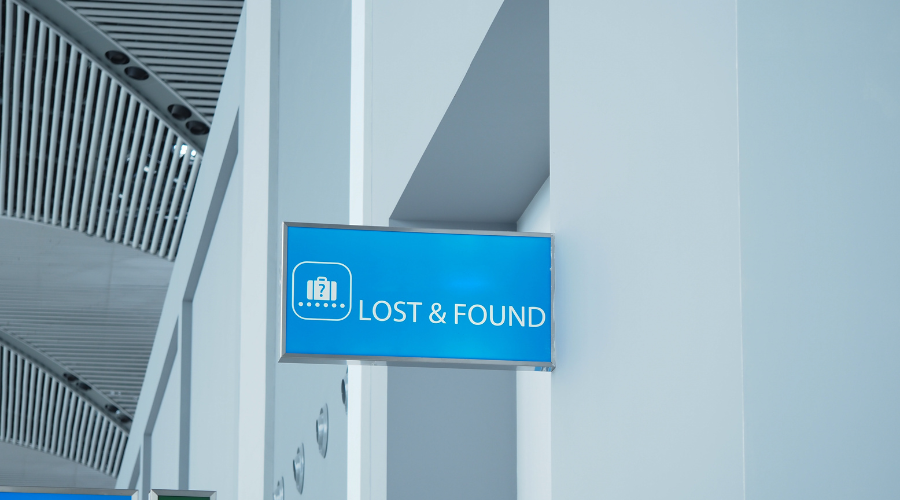
Clear navigation inside and outside a property directly affects how customers experience a business. From office complexes to healthcare facilities and retail centers, Wayfinding Signs reduce confusion and help visitors move confidently through a space. When designed with strategy, these signs also reinforce brand identity and support daily operations.
At Sign On LLC, businesses receive professionally designed signage systems built to guide, inform, and support customer flow. Proper planning ensures each sign works as part of a larger navigational system rather than as a standalone board.
Understanding Wayfinding in Modern Business Spaces
Wayfinding is more than arrows on walls. It is a structured communication system that combines architecture, design, and signage. Effective Wayfinding Signs guide people from entry points to destinations without requiring assistance from staff.
Modern commercial properties often include:
- Multi-level office buildings
- Hospitals and medical campuses
- Educational institutions
- Shopping centers
- Event venues
Without a clear signage plan, visitors waste time, employees answer repetitive questions, and the brand experience suffers.
Why Businesses Invest in Custom Directional Signs
Standard signs may provide basic directions, but custom directional signs align with brand colors, typography, and space layout. Businesses choose custom systems because they want clarity without sacrificing visual consistency.
1. Improved Customer Experience
Clear navigational signage reduces stress for first-time visitors. Whether someone is attending a meeting or visiting a clinic, clear guidance builds confidence.
2. Stronger Brand Identity
When directional elements match interior design and brand standards, the space feels organized and professional. This is especially important in competitive markets.
3. Operational Efficiency
Staff spend less time giving directions and more time focusing on core responsibilities.
The Role of Wayfinding and Signage Design
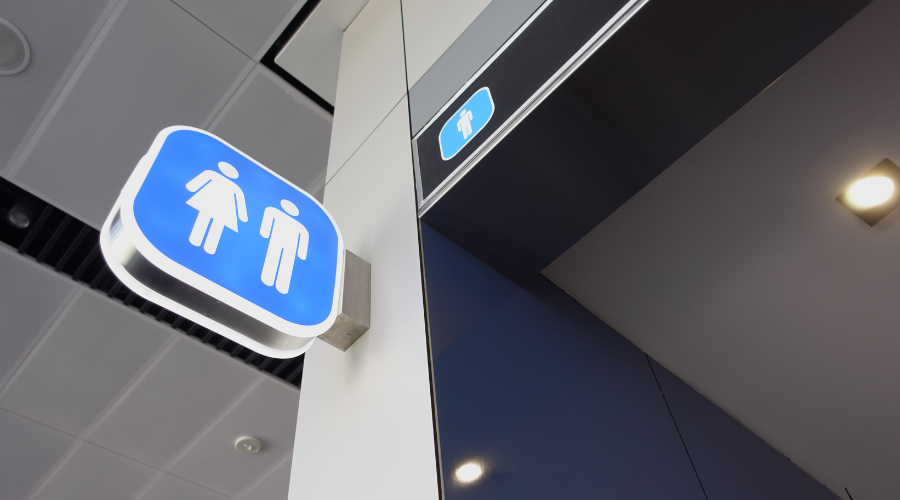
Effective wayfinding and signage design considers human behavior. Designers analyze how people enter, pause, and move within a building. Sign placement must feel natural and visible from appropriate angles.
A strong system includes:
- Exterior entry signs
- Lobby directories
- Floor identification markers
- Hallway directional panels
- ADA-compliant room identification
Every component, including Indoor – Wayfinding elements, supports the overall purpose of Wayfinding Signs, which is to ensure seamless movement throughout the property while maintaining clarity, consistency, and a professional environment for visitors and staff..
How Wayfinding in Design Impacts Layout Planning
Wayfinding in design begins before signs are installed. Architects and signage experts collaborate to ensure traffic flow makes sense structurally. Poor building layout cannot be fixed with signage alone. However, strategic placement significantly improves navigation.
For example, color-coded zones in hospitals help patients quickly identify departments. Retail stores use overhead markers to guide shoppers toward product categories. Office spaces incorporate suite numbering systems that logically progress from one corridor to another.
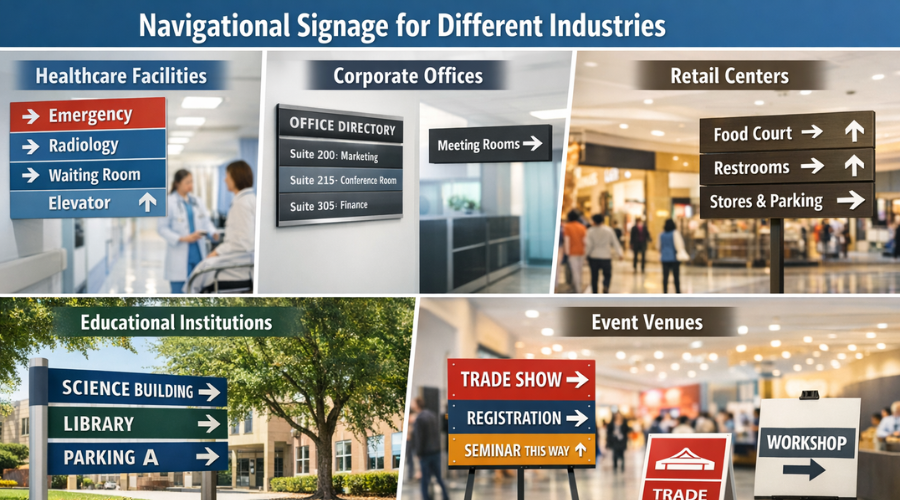
Navigational Signage for Different Industries
Healthcare Facilities
Hospitals rely heavily on navigational signage. Patients and visitors often feel anxious, and clear guidance reduces stress. Departments, waiting rooms, labs, and exits must be clearly labeled.
Corporate Offices
Office buildings benefit from branded lobby directories and suite identification signs. Visitors should reach meeting rooms without confusion.
Retail Centers
Large shopping centers require exterior and interior directional systems that guide foot traffic efficiently.
Educational Institutions
Campuses use building markers, department directories, and parking area signage to manage student movement.
Event Venues
Temporary directional signs for events support guest flow, especially in trade shows and conferences. Directional signs for events must be visible, portable, and easy to update.
Design Elements That Make Wayfinding Signs Effective
An effective sign is readable within seconds. Key design principles include:
- High contrast colors
- Clear typography
- Simple arrows and icons
- Proper mounting height
- Consistent spacing
Consistency across the system ensures visitors quickly recognize and trust the information provided.
Materials and Durability
Businesses choose materials based on location and usage. Indoor signs may use acrylic, aluminum, or PVC panels. Outdoor signs require weather-resistant materials with UV protection. Professional fabrication ensures Wayfinding Signs maintain clarity over time without fading or peeling.
Compliance and Accessibility
Compliance is not optional. ADA guidelines require specific font sizes, tactile lettering, and braille elements in certain environments. Proper installation height and spacing must also follow regulations.
Working with experienced professionals ensures signage meets legal standards while maintaining design integrity.
How Sign On LLC Approaches Custom Directional Systems
At Sign On LLC, every project begins with a site evaluation. The team studies entry points, traffic flow, and brand standards before proposing a signage plan.
The process typically includes:
- Consultation and space assessment
- Concept development
- Material selection
- Fabrication
- Professional installation
This structured approach ensures that Wayfinding Signs function as a cohesive system.
Impact on Customer Retention and Reviews
Navigation plays a hidden role in customer satisfaction. When visitors find their destination quickly, they associate the experience with efficiency and professionalism.
Positive navigation experiences contribute to:
- Higher review ratings
- Increased repeat visits
- Better event attendance
- Stronger brand trust

Digital Integration with Physical Signage
| Integration Type | Description | Business Benefit | Ideal Location |
| Digital Directories | Interactive touchscreens that display tenant or department listings | Real-time updates without replacing panels | Lobbies, entrances |
| LED Message Displays | Programmable screens showing announcements or alerts | Quick communication for promotions or changes | Retail centers, campuses |
| QR Code Integration | Scannable codes on physical signs linking to maps or websites | Extended navigation support on mobile devices | Hallways, event spaces |
| Smart Room Panels | Digital nameplates outside meeting rooms | Live scheduling visibility | Corporate offices |
| Emergency Alert Screens | Integrated digital alerts with static exit signage | Improved safety communication | Hospitals, large facilities |
| Wayfinding Mobile Sync | Signage linked with mobile navigation apps | Seamless indoor navigation experience | Large commercial buildings |
Some businesses integrate digital directories or LED displays into their system. Digital screens allow real-time updates for tenant changes or event schedules.
However, physical signage remains essential for constant visibility and emergency directions.
Maintenance and Long-Term Planning
A signage system should be reviewed periodically. Businesses expand, departments relocate, and tenant directories change. Planning ahead ensures updates remain consistent with the original design. Routine maintenance keeps surfaces clean and lettering legible.
For professionally designed directional systems, contact us at 239-800-9454 to discuss your project requirements.
If your business needs structured navigation that improves customer flow and strengthens brand identity, schedule a consultation with our signage specialists today.
Custom directional Wayfinding Signs improve navigation, strengthen branding, and enhance customer satisfaction. Clear signage supports positive reviews on Google Business Profile and Facebook, helping businesses build trust and attract repeat visitors consistently.
Frequently Asked Questions
Q1. What are Wayfinding Signs?
Wayfinding Signs are structured signage systems that guide people through buildings or properties using clear directions and visual cues.
Q2. Why are custom directional signs important?
Custom directional signs align with brand identity and ensure navigation fits the building layout rather than using generic templates.
Q3. How often should signage systems be updated?
Signage should be reviewed annually or whenever departments, tenants, or layouts change.
Q4. Do directional signs for events require permits?
Temporary event signage may require permits depending on local regulations. Professional sign companies help manage compliance.