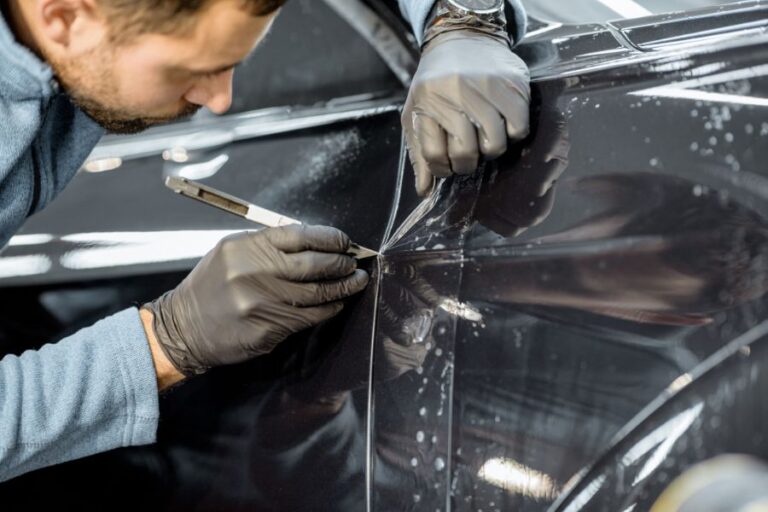
We’ve installed wraps on hundreds of vehicles across Naples, Fort Myers, and Cape Coral. Here’s the unfiltered truth.
The short answer: A professionally installed vehicle wrap in Florida typically lasts 3 to 5 years with basic care, and can reach 6 to 7 years with premium materials and consistent maintenance. What you choose, how it’s installed, and how you care for it matters more than any single number.
Why Florida’s Climate Is So Hard on Vehicle Wraps
Most wrap manufacturers test and rate their products based on average U.S. climate conditions. Florida — and SWFL specifically — sits at the extreme end of that spectrum in nearly every category that affects vinyl longevity.
UV radiation is the primary culprit. The sun’s ultraviolet rays break down the chemical structure of vinyl film over time, degrading the plasticizers that keep the material flexible and the pigments that keep colors vivid. Florida consistently ranks among the highest UV index states in the country, and the sun is intense here for 300+ days a year — not just in summer.
Heat cycles add another layer of stress. When a vehicle sits on a dark asphalt parking lot in Naples in July, the surface temperature of that wrap can reach 180°F or higher. Every time the vehicle cools down at night and heats back up the next morning, the vinyl expands and contracts. Over hundreds of these cycles, the material fatigues — especially around edges, curves, and recessed areas.
Humidity and salt air attack the adhesive bond between the vinyl and your vehicle’s paint. If an installer doesn’t properly clean and prep the paint surface, or doesn’t seal every edge correctly, moisture from the humid SWFL air finds its way under the wrap. Once that process starts, the adhesive releases progressively and the edges begin to lift. Salt air from the Gulf accelerates this even further for coastal areas like Marco Island, Bonita Beach, and Fort Myers Beach.
The result is a real-world lifespan that’s typically 12 to 18 months shorter than manufacturer ratings suggest — unless you’re using the right materials and the wrap is installed by someone who genuinely understands what the Florida climate demands.
Vehicle Wrap Lifespan in Florida: By Film Type
Not all vinyl wraps are made from the same material, and the type of film you choose is one of the biggest factors controlling how long your wrap lasts in SWFL conditions. Here’s how the most common options compare based on what we’ve seen in the field:
| Wrap Film Type | SWFL Expected Lifespan | Recommended Use |
|---|---|---|
| Premium cast vinyl | 5 – 7 years | Full vehicle wraps, compound curves |
| Calendered vinyl | 2 – 4 years | Flat panels, budget graphics, short-term |
| Reflective vinyl | 3 – 5 years | Fleet safety markings, emergency vehicles |
| Matte color-change vinyl | 4 – 6 years | Personal vehicles, appearance upgrades |
| Printed partial wrap | 3 – 5 years | Business branding, door & panel graphics |
| Chrome / specialty film | 2 – 4 years | Show vehicles, accent areas, limited use |
The most important distinction is between cast vinyl and calendered vinyl. Cast film is manufactured by pouring a liquid vinyl mixture and allowing it to cure — a process that produces a thinner, more stable film with better memory and conformability. Calendered film is made by pressing and stretching the vinyl through rollers, which introduces internal stress into the material. In Florida’s heat, calendered vinyl tends to shrink and pull away from edges much faster than cast film.
For any full vehicle wrap in Southwest Florida, cast vinyl from a premium brand like 3M, Avery Dennison, or Arlon is the only material we recommend at Sign On LLC. The cost difference over the life of the wrap is minimal. The performance difference is significant.
The 5 Real Factors That Control How Long Your Wrap Lasts
Beyond film type, the actual lifespan of your wrap in Florida comes down to five key variables. Understanding these helps you ask better questions when getting quotes and make smarter decisions about ongoing care.
1. Film & Laminate Quality
Premium cast vinyl with a UV-rated overlaminate is essential in Florida. The overlaminate alone can add 1 to 2 years of life by shielding pigments from direct UV radiation.
2. Installation Quality
Poor prep, trapped air, and unsealed edges are the top causes of early wrap failure — often more than the material itself. Every edge should be heat-sealed and every bubble eliminated before the job is done.
3. Sun Exposure & Parking
A wrap parked outside in a Naples lot full-time ages 30–40% faster than one stored under cover. Even partial shade from a tree or building makes a measurable difference over 5 years.
4. Washing & Care Routine
High-pressure spray aimed at edges, harsh chemical cleaners, and automated brush car washes all shorten wrap life. Hand washing with pH-neutral soap is the gold standard for SWFL wrap care.
5. How Quickly You Address Issues
A 2-inch edge lift repaired in the first week costs almost nothing. That same lift ignored for three months in Florida humidity becomes a full panel replacement. Speed matters enormously here.
How to Spot Wrap Aging Before It Becomes a Real Problem
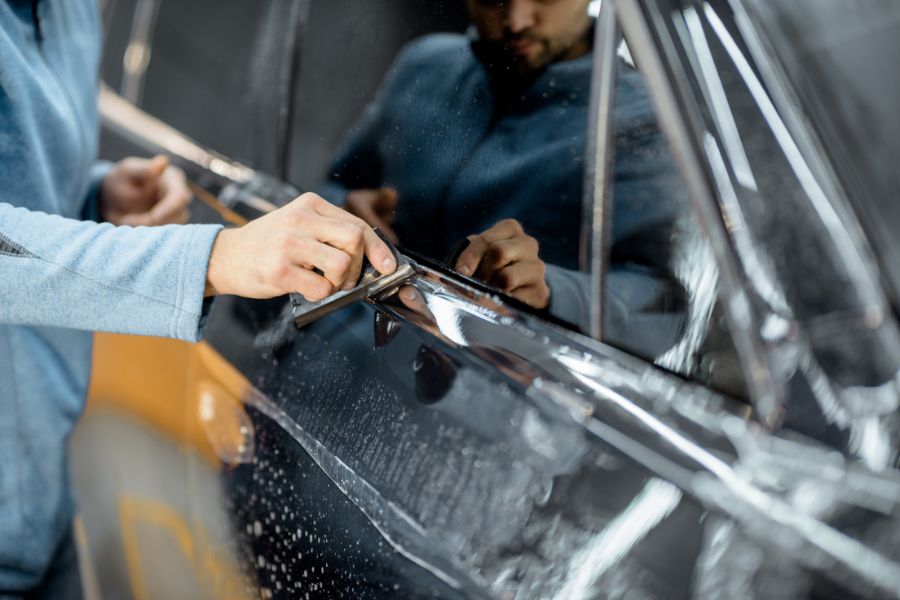
Most vehicle wraps don’t fail suddenly — they give you warning signs. Learning to recognize early deterioration allows you to get ahead of problems before they spread and become expensive.
Edge lifting and corner peeling
This is almost always the first sign of wrap trouble, and it’s most common around door handles, side mirrors, front bumpers, and rear bumper edges. These are flex zones where the vinyl stretches and relaxes every time the door opens or the vehicle hits a bump. If the adhesive bond was weak to begin with — due to poor prep or high humidity during installation — moisture works in from the edges and accelerates the lifting. Catch it early and it’s a quick fix. Leave it and the entire panel can go.
Color fading and oxidation on horizontal surfaces
Hoods, rooftops, and trunk lids take the most direct sun exposure in Florida. Without a quality UV overlaminate, the pigments in printed wraps and color-change films begin breaking down faster on these surfaces than anywhere else. You’ll notice a dull, chalky appearance that doesn’t wash off. Darker colors — black, navy, forest green — show this first. Lighter colors like white and silver are more forgiving under the Florida sun.
Wrinkling and bubbling in heat
Some light surface wrinkling during peak heat of the day is normal with certain films. If you’re seeing persistent bubbles or raised sections that don’t flatten out as the vehicle cools, that’s a sign of adhesive failure or installation error — not just heat. These need to be addressed by a professional before they spread.
Print fading on commercial graphics
If your van has full-color printed graphics — a logo, contact information, photos — you may notice the printed image fading or shifting in hue before the vinyl itself fails. This is usually a sign that the print laminate wasn’t UV-rated, or that the laminate has reached the end of its effective life. Reprinting and re-laminating specific panels is often more cost-effective than a full rewrap at this stage.
Practical Care Tips to Extend Wrap Life in SWFL
You can’t stop Florida’s sun, but you can significantly slow how fast it works on your wrap. These habits make a real, measurable difference over the lifespan of your vehicle graphics:
- Hand wash with pH-neutral soap and a soft microfiber mitt. Rinse from the top down and never aim high pressure directly at any edge.
- Apply a vinyl-safe spray protectant like 3M Wrap Care or Meguiar’s Ultimate Spray Wax every 3 months. This adds a UV-blocking barrier and prevents the vinyl surface from drying out and cracking prematurely.
- Park under cover whenever possible. A carport, garage, or even consistent tree shade can reduce UV exposure by 40% or more compared to open-lot parking in the Florida sun.
- Avoid automated brush car washes. The spinning brushes grab at wrap edges and cause micro-tears and lifting. Touchless automatic washes are acceptable but still not ideal. Hand washing is always the best option.
- Inspect your wrap monthly. Run your fingers along all the edges — bumpers, mirrors, door handles, roof edges — and feel for any lifting. Catching a 1-inch edge lift in month two versus month ten is the difference between a minor re-seal and a full panel replacement.
- Treat bird droppings and tree sap immediately. Both are acidic and will eat through wrap laminates if left sitting in Florida’s heat. Keep a bottle of wrap-safe waterless cleaner in your vehicle.
Full Wrap vs. Partial Wrap: Does It Affect Longevity?
This question comes up often, and the honest answer is that lifespan isn’t dramatically different between a full and partial wrap — but the visual aging is. A partial wrap that covers 60% of your vehicle will leave sections of original paint exposed. Over several years, the paint in those exposed areas will fade from UV exposure at a different rate than the wrapped sections. When the wrap is eventually removed, there will be a visible color line showing where the wrap was.
A full wrap ages uniformly across the whole vehicle. When it comes off, the factory paint underneath is often in noticeably better condition than the exposed areas on vehicles with partial wraps — because the vinyl has been protecting it from UV, rock chips, and minor abrasion all along. From a long-term vehicle value standpoint, a full wrap is almost always the smarter investment, especially if you intend to keep the vehicle for 4 or more years.
Sign On LLC proudly serves Naples, Fort Myers, Cape Coral, Bonita Springs, Marco Island, Estero, Lehigh Acres, Port Charlotte, and all surrounding Southwest Florida communities.
Fleet Wrap Planning for SWFL Businesses
If you’re managing a fleet of branded vehicles in Southwest Florida — whether it’s three service vans or thirty — lifespan planning becomes a business decision, not just a maintenance question. Based on our experience at Sign On LLC, here’s a realistic framework for SWFL fleet wrap budgeting:
- Full cast vinyl wraps used daily outdoors: plan for a refresh cycle every 4 to 5 years.
- Partial graphic wraps used daily outdoors: plan for a refresh every 3 to 4 years.
- Spot graphics and decals (door logos, phone numbers): plan for replacement every 2 to 3 years to keep branding looking sharp.
The ROI on fleet wraps in markets like Naples, Fort Myers, Cape Coral, and Bonita Springs remains strong even when factoring in replacement cycles. A well-branded commercial van generates thousands of local impressions per day at a cost-per-impression that no other advertising medium can match. That math holds up across multiple refresh cycles over the life of the vehicle.
Sign On LLC works with SWFL businesses on full fleet wrap programs — from initial design through installation, scheduled maintenance, and planned replacement — so your brand stays consistent and professional across your entire fleet over time.
What to Look for in a Vehicle Wrap Shop in Southwest Florida
The installer you choose matters as much as the materials. Not every wrap shop in SWFL has the experience or the standards to produce work that holds up in this climate. Here are the questions worth asking before you sign anything:
What film brands do you use — and why?
Any reputable installer should be able to name their primary film suppliers and explain why they chose them. If the answer is vague or they lead with price rather than performance, that’s a signal worth paying attention to. In Florida, premium cast vinyl from a tier-one supplier isn’t optional — it’s the baseline.
Does the price include a UV overlaminate?
Some shops quote aggressively low prices by skipping the overlaminate. In Florida, that’s a false economy. The overlaminate is the UV shield for your printed graphics and color-change films. Without it, you’re cutting a year or more off the lifespan of the wrap from day one.
How do you prep the vehicle surface?
Proper prep involves a full decontamination wash, clay bar treatment to remove embedded contaminants, isopropyl alcohol wipe-down, and in many cases a panel-level inspection for paint adhesion issues. A shop that skips or abbreviates this process is setting up the adhesive bond to fail — and it usually does within the first year in Florida’s humidity.
Do you offer any kind of follow-up or maintenance service?
A shop that stands behind its work will offer a check-in at 6 months or a year to inspect edge seals and address any early lifting. This is standard practice at Sign On LLC. It’s not standard everywhere — but it should be.
Frequently Asked Questions
Q1: How long does a vehicle wrap last in Florida’s heat?
A professionally installed vehicle wrap in Florida typically lasts 3 to 5 years with regular care. If you use premium cast vinyl film with a UV-rated overlaminate and store the vehicle in shade when possible, you can realistically get 6 to 7 years out of it. The Florida sun, humidity, and salt air all work against the wrap faster than in cooler states, so material quality and proper installation matter more here than almost anywhere else.
Q2: Does parking outside in Florida really shorten wrap life?
Yes, significantly. A vehicle parked outside daily in Southwest Florida under direct sun ages 30 to 40 percent faster than one kept under a carport or in a garage. The UV radiation and heat cycles that build up on an exposed wrap every single day break down the vinyl and adhesive much faster than if the vehicle had even partial shade. If covered parking is not an option, applying a vinyl-safe UV protectant spray every three months becomes even more important.
Q3: What is the difference between cast vinyl and calendered vinyl in Florida?
Cast vinyl is made by pouring liquid film and letting it cure slowly, which produces a stable, flexible material that handles Florida’s heat cycles without shrinking. Calendered vinyl is made by pressing and stretching the material through rollers, which builds internal stress into the film. In Florida’s extreme heat, calendered vinyl tends to pull away from edges and shrink noticeably faster than cast vinyl. For any full vehicle wrap in SWFL, cast vinyl from a brand like 3M or Avery Dennison is always the better choice.
Q4: Can Sign On LLC wrap commercial fleet vehicles in Southwest Florida?
Absolutely. Sign On LLC has been wrapping commercial fleets across Naples, Fort Myers, Cape Coral, Bonita Springs, and all of Southwest Florida for over 10 years. We handle everything from single vehicle installs to full multi-vehicle fleet programs, including design consistency, scheduled installation, and ongoing maintenance checks to keep your brand looking sharp across every vehicle in your fleet.
The Bottom Line
Vehicle wraps in Southwest Florida face conditions that most of the country simply doesn’t deal with. The UV radiation alone is enough to shorten wrap life by over a year compared to more temperate climates — and when you layer in the coastal humidity, heat cycling, and salt air, you’re working with a genuinely demanding environment.
But that doesn’t mean a vehicle wrap isn’t worth it in Florida. It means doing it right from the start. That means premium cast vinyl film, a UV-rated overlaminate, professional surface prep, precise installation, and a regular care and inspection routine. When all of those pieces are in place, vehicle wraps in SWFL absolutely deliver on their lifespan potential — and the branding return on investment for commercial vehicles in this market remains as strong as anywhere in the country.
After 10 years of installs across Naples, Fort Myers, Cape Coral, Bonita Springs, and the surrounding SWFL area, Sign On LLC has seen every way a wrap can succeed and every way it can fail. We’ve built our process specifically around what this climate demands — and we’re proud of the results our customers drive away with every day.
If you’re thinking about wrapping a vehicle — one van or a full fleet — we’d love to give you an honest assessment and a detailed quote. No pressure. No upselling. Just straightforward advice from a team that’s been doing this in Southwest Florida for a decade.
Ready to Get a Wrap That Actually Lasts?
Sign On LLC has been Southwest Florida’s trusted vehicle wrap and fleet graphics provider for over 10 years. Let’s talk about what your vehicle needs.
Serving Naples · Fort Myers · Cape Coral · Bonita Springs · Marco Island · All of SWFL
Related Topics